Episode 29 · Slide 1Episode 29 · Slide 1 · weight loss surgery: understanding the choice
Episode 29 · Slide 1
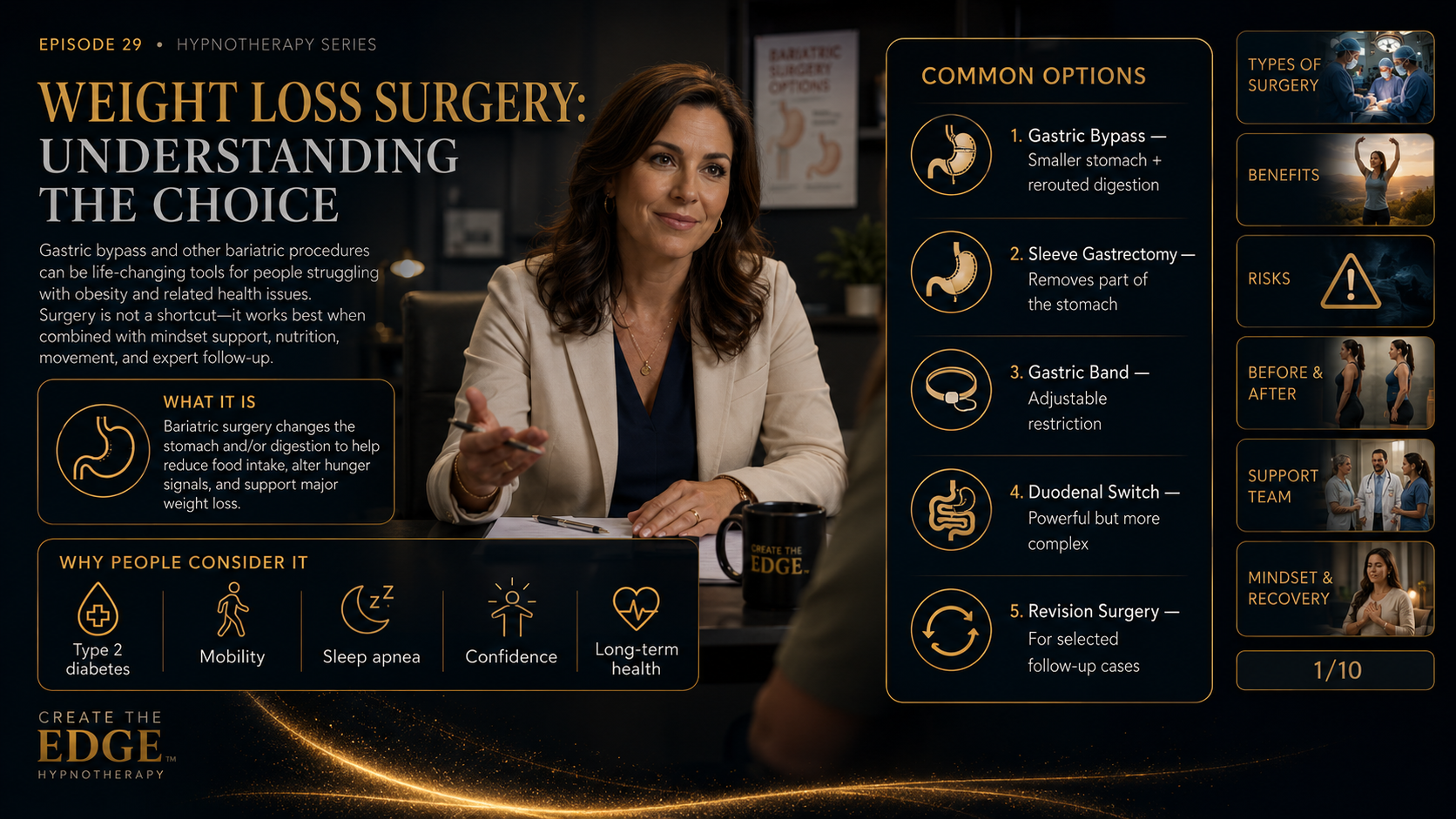
WEIGHT LOSS SURGERY: UNDERSTANDING THE CHOICE
Gastric bypass and other bariatric procedures can be genuinely life-changing tools for people struggling with obesity and the health conditions that accompany it. But surgery is not a shortcut, and it works best when it is one part of a comprehensive approach that includes mindset support, nutrition, movement, and consistent medical follow-up.
Understanding what these procedures are, how they work, and what they require helps you make a truly informed decision rather than one driven by hope or fear alone. That clarity is the foundation of a successful outcome.
This episode introduces the landscape of bariatric surgery: the types of procedures available, who may benefit, what the risks and benefits look like, and how hypnotherapy fits into the broader picture of surgical weight loss support.
Reflect
1. What has brought you to a place where you are considering or curious about weight loss surgery?
2. What do you most hope surgery could change about your health or your life?
3. What concerns or fears do you carry about this type of procedure?
4. What kind of support, emotional and practical, do you believe you would need before, during, and after surgery?
5. What does a truly successful outcome look like to you, beyond a number on the scale?
Episode 29 · Slide 2Episode 29 · Slide 2 · common weight loss surgeries
Episode 29 · Slide 2
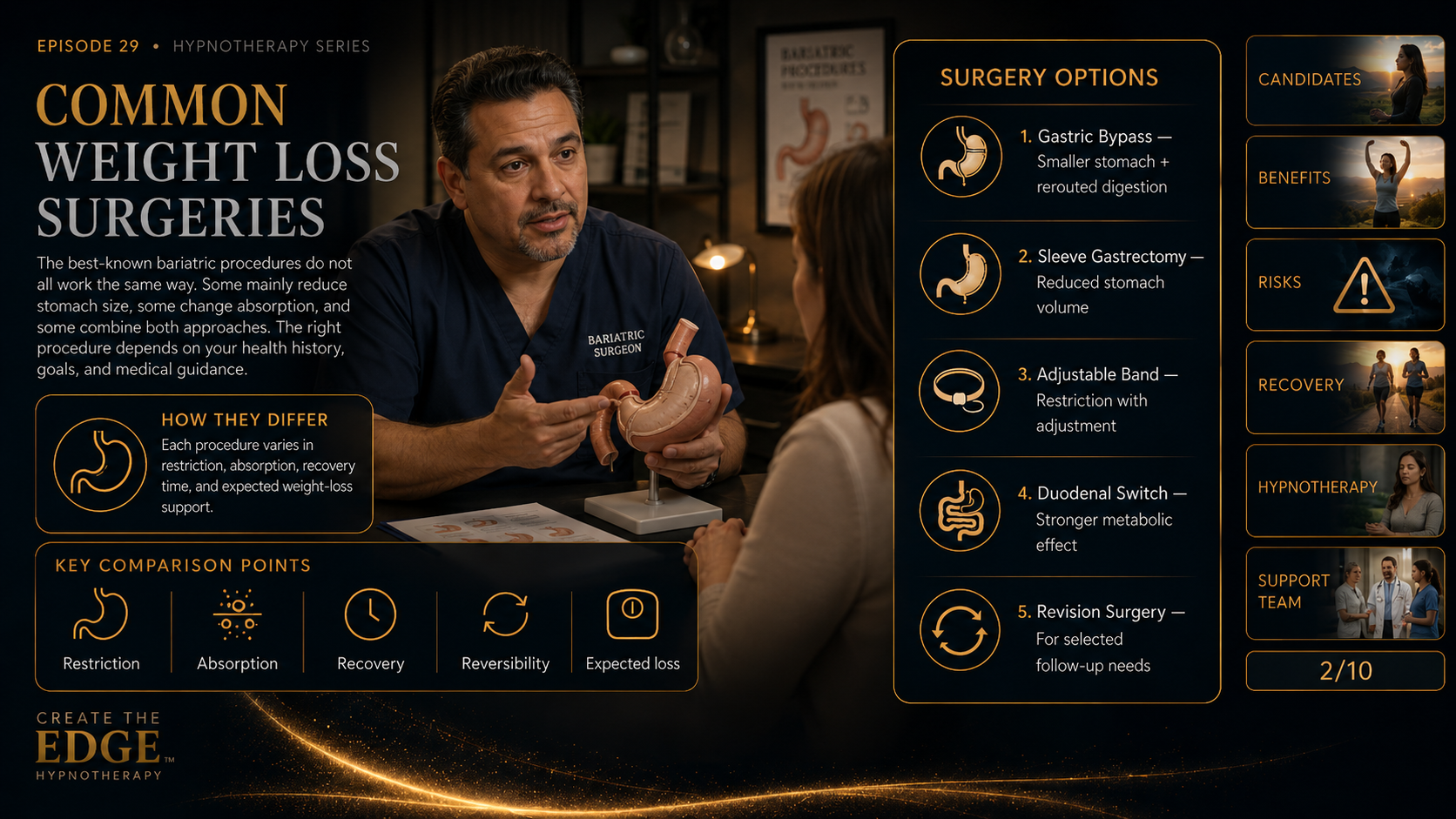
COMMON WEIGHT LOSS SURGERIES
Bariatric procedures differ significantly in how they work. Some primarily reduce stomach size, limiting the amount you can eat at one time. Some alter how food is absorbed. Some do both. Each comes with a different profile of expected weight loss support, recovery time, and long-term requirements.
Gastric bypass creates a smaller stomach pouch and reroutes digestion, affecting both restriction and absorption. Sleeve gastrectomy removes a portion of the stomach, creating a narrower sleeve shape. Adjustable banding places a device around the upper stomach that can be modified over time. The duodenal switch offers a more powerful metabolic effect and is used in more complex cases.
Understanding these differences matters because the right procedure for one person may not be the right one for another. Your health history, goals, and medical team's guidance should lead that decision.
Reflect
1. Were you aware of the different types of bariatric procedures before this episode? What did you know?
2. What aspects of these procedures feel most important to understand before any decision is made?
3. How do you feel about the permanence of most surgical weight loss procedures?
4. What would you want to discuss with a bariatric surgeon before proceeding?
5. What additional information would help you feel more prepared to have an informed conversation with a medical provider?

Episode 29 · Slide 3Episode 29 · Slide 3 · who might be a candidate?
Episode 29 · Slide 3
WHO MIGHT BE A CANDIDATE?
Bariatric surgery is typically considered when obesity is significantly affecting health, daily function, or quality of life, and when previous weight loss efforts have not produced lasting results. A full evaluation looks at BMI, existing medical conditions, psychological readiness, and commitment to long-term lifestyle change.
Candidacy is not only about body size. It is about the whole person: their history with weight loss attempts, their current health status, their emotional readiness for a major physical change, and their ability to commit to the ongoing nutrition, monitoring, and support that surgical weight loss requires.
Surgery is a powerful tool. And like all powerful tools, it works best in the hands of someone who is fully prepared to use it wisely.
Reflect
1. Based on what you now know, do you believe you might be a candidate for bariatric surgery? What leads you to that sense?
2. What aspects of the candidacy process feel most important to you?
3. What would you need to have in place, emotionally and practically, before you felt truly ready for this?
4. What does commitment to lifelong habits look and feel like for you in concrete terms?
5. What would a thorough, honest conversation with a bariatric specialist reveal about where you are right now?

Episode 29 · Slide 4Episode 29 · Slide 4 · the potential benefits
Episode 29 · Slide 4
THE POTENTIAL BENEFITS
For the right candidate, bariatric surgery can produce meaningful and lasting health improvements. Many of the benefits extend well beyond weight loss itself: improved blood sugar control, reduced joint strain, better sleep quality, lower blood pressure, and a renewed sense of possibility.
The changes can come quickly in some areas and gradually in others. Blood sugar improvements, for example, often occur within days or weeks of surgery, sometimes before significant weight loss has occurred. This reflects the powerful metabolic effects of certain procedures.
These benefits are real and well-documented. They are also most fully realized when surgery is supported by the kind of comprehensive care that addresses nutrition, movement, mental health, and long-term follow-up.
Reflect
1. Which of the potential benefits of bariatric surgery matters most to you personally? Why?
2. How has excess weight affected your health, your energy, and your quality of life in concrete ways?
3. What would better health, energy, and mobility make possible in your daily life that feels difficult or impossible now?
4. How do you imagine your relationship with your body changing after significant weight loss?
5. What non-physical transformation would be most meaningful to you as part of this journey?

Episode 29 · Slide 5Episode 29 · Slide 5 · understanding the risks
Episode 29 · Slide 5
UNDERSTANDING THE RISKS
Every surgical procedure carries risks, and bariatric surgery is no exception. An informed decision requires understanding not just the potential benefits but the full range of risks: from surgical complications to longer-term nutritional and metabolic considerations.
Risks are meaningfully reduced when surgery is performed by an experienced, board-certified bariatric team, when candidacy is carefully evaluated, and when patients commit to the nutritional monitoring, supplementation, and follow-up that the procedure requires for life.
Honest, thorough conversations with your surgical team are essential. The goal is not to be frightened away from a potentially life-changing intervention but to enter it with clear eyes and appropriate preparation.
Reflect
1. Which of the risks associated with bariatric surgery concern you most? Have you discussed these with a provider?
2. What would you need to know about risk management to feel adequately informed?
3. How do you typically respond when weighing significant risk against significant potential benefit?
4. What support would help you manage anxiety about surgical risk while still making a clear-eyed decision?
5. What does informed consent, truly understanding what you are agreeing to, look and feel like for you?
Episode 29 · Slide 6Episode 29 · Slide 6 · before and after: the real journey
Episode 29 · Slide 6
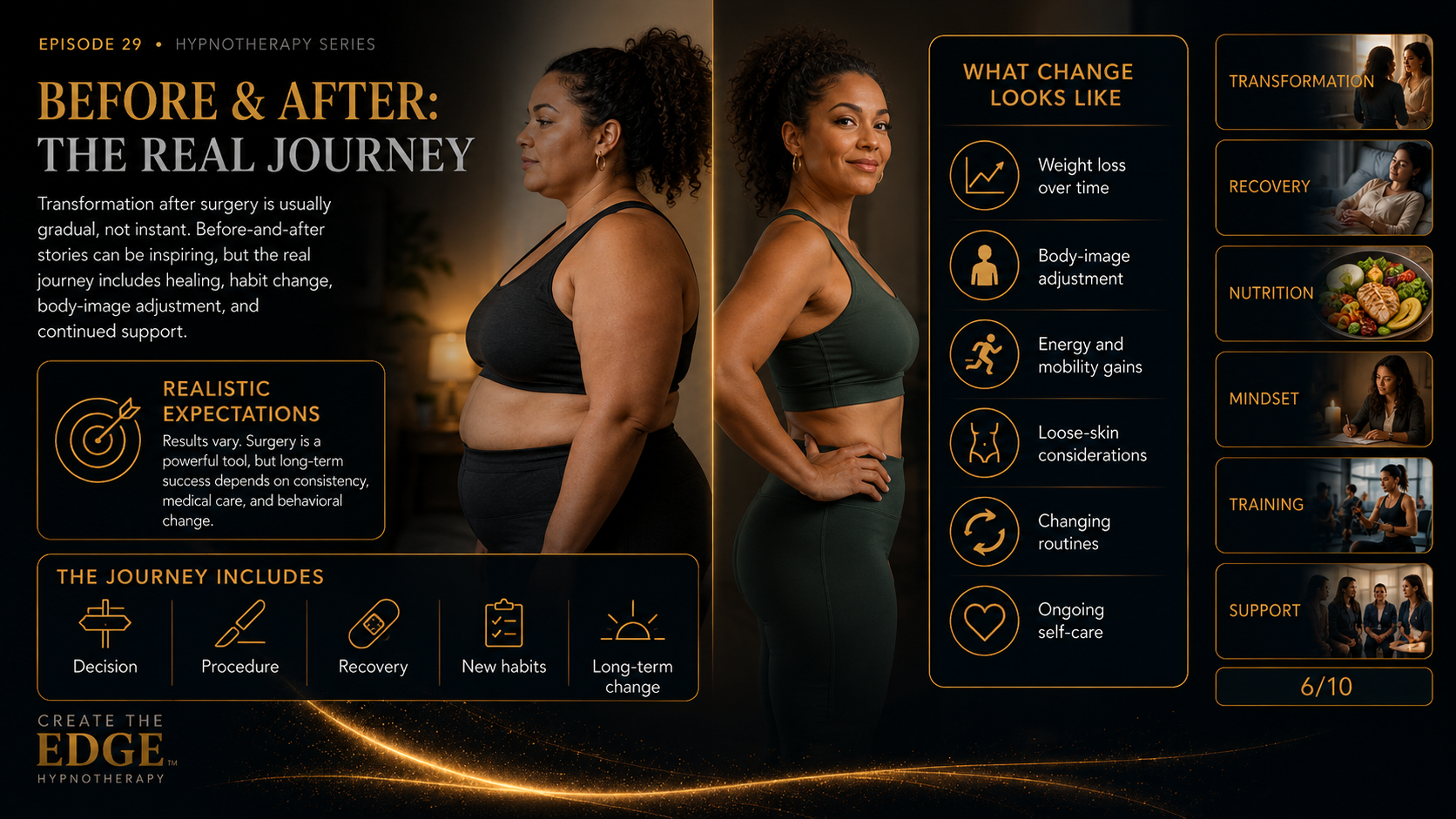
BEFORE AND AFTER: THE REAL JOURNEY
Transformation after bariatric surgery is usually gradual rather than sudden. The before-and-after images that circulate widely often show the end result without revealing the months of healing, adjustment, new habits, body image shifts, and ongoing self-care that produced it.
Realistic expectations are protective. They help you prepare for the full arc of the journey rather than being blindsided by the difficulty of the middle. Recovery takes time. New eating patterns take time. The emotional and psychological adaptation to a changing body takes time.
The most successful patients are those who approach surgery not as a solution but as a beginning: the beginning of a new relationship with their body, their health, and themselves.
Reflect
1. What realistic expectations do you carry about the timeline and process of post-surgical transformation?
2. What aspects of the post-surgical journey feel most daunting to you?
3. How do you typically handle the middle of a difficult process, when the initial momentum has faded and the goal still feels distant?
4. What would sustainable, long-term success look and feel like in your life?
5. Who in your life would be your most important source of support during a surgical weight loss journey?
Episode 29 · Slide 7Episode 29 · Slide 7 · after surgery: recovery and nutrition
Episode 29 · Slide 7
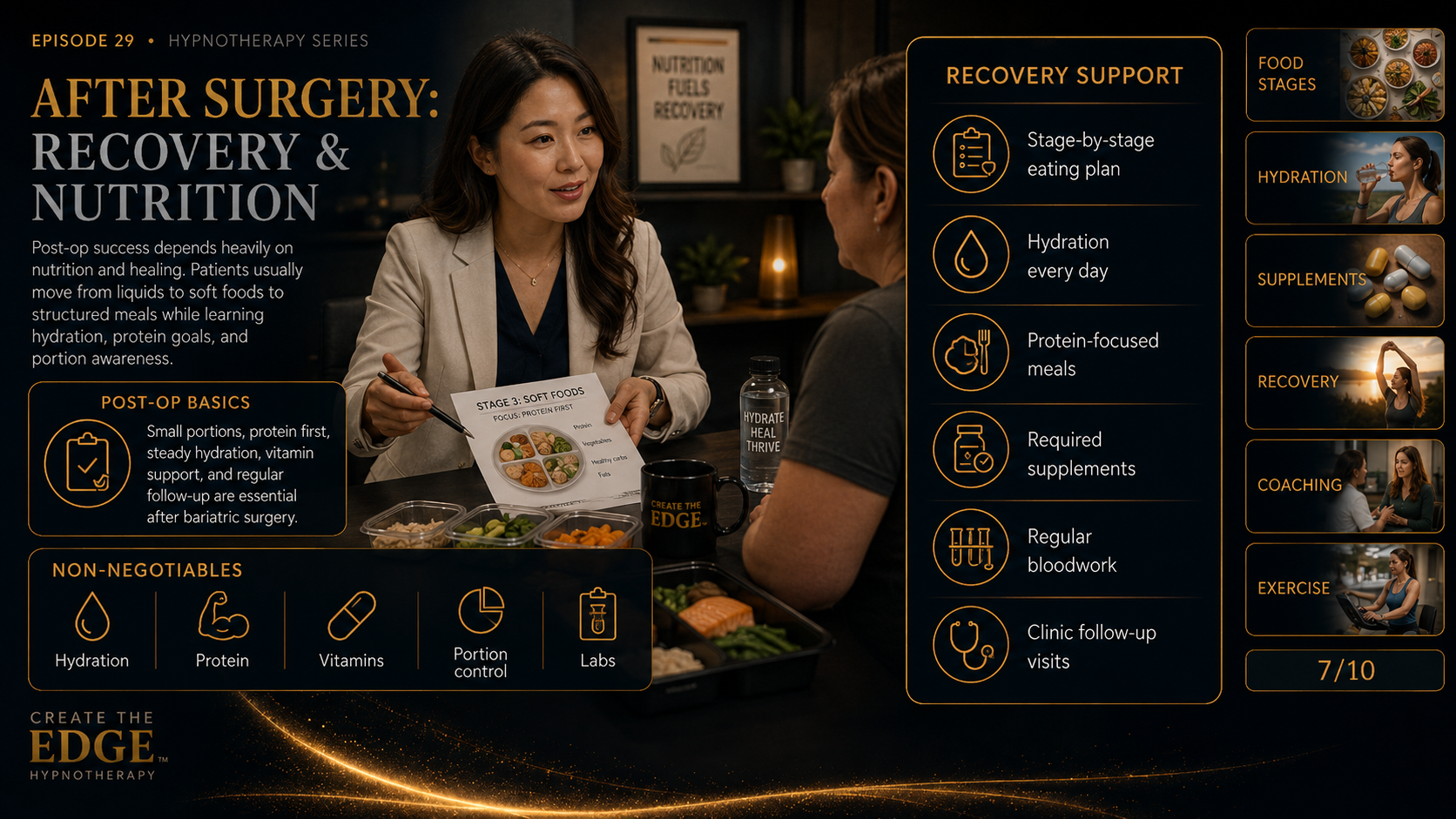
AFTER SURGERY: RECOVERY AND NUTRITION
Post-operative success depends heavily on the nutritional transition that follows surgery: moving carefully through stages from liquids to soft foods to structured meals while learning new patterns around portion size, hydration, protein intake, and vitamin supplementation.
These are not temporary restrictions. They are a new relationship with food, one that the surgery makes both necessary and possible. Learning to eat in ways that support long-term health becomes a daily practice rather than a diet.
Regular follow-up appointments, consistent lab work, and honest communication with your care team are non-negotiable aspects of a successful long-term outcome. The surgery changes the anatomy. The aftercare determines whether that change translates into lasting health.
Reflect
1. How do you currently relate to food, eating patterns, and nutritional habits?
2. What do you anticipate being most challenging about the post-surgical nutritional requirements?
3. What support systems, a dietitian, a support group, a therapist, would help you navigate the nutritional transition?
4. How committed are you to the long-term follow-up and monitoring that surgical weight loss requires?
5. What does a healthy relationship with food look like for you in your ideal future?

Episode 29 · Slide 8Episode 29 · Slide 8 · the mindset side of success
Episode 29 · Slide 8
THE MINDSET SIDE OF SUCCESS
Surgery changes the body. Lasting success also requires support for the mind. Many people who undergo bariatric surgery find that emotional eating patterns, cravings, old habits around food and comfort, and body image struggles do not resolve on their own after the procedure.
Hypnotherapy and behavioral support before and after surgery can help reduce the emotional eating that might otherwise undermine physical results. They can help manage cravings, address fear of regain, support body image adjustment, and reinforce confidence through the many stages of change.
The most durable outcomes happen when the inner work keeps pace with the physical transformation. Surgery creates the conditions for change. Mindset work helps you live into them.
Reflect
1. How much of your current eating is driven by emotion rather than physical hunger?
2. What emotional situations most predictably lead you to reach for food?
3. How do you currently manage stress, comfort-seeking, and emotional regulation?
4. What role do you believe mindset support could play in your surgical journey?
5. What would it mean to address the emotional relationship with food as carefully as the physical one?

Episode 29 · Slide 9Episode 29 · Slide 9 · success takes a whole team
Episode 29 · Slide 9
SUCCESS TAKES A WHOLE TEAM
The strongest surgical weight loss outcomes typically involve comprehensive support from multiple specialists who each guide a different part of the journey. A bariatric surgeon, a registered dietitian, a therapist or hypnotherapist, a personal trainer when cleared, and a primary care provider all contribute to outcomes that last.
No single professional can provide everything a patient needs through this process. And no patient should have to navigate it alone. The team approach is not a luxury. It is how the best outcomes are produced.
Building your team before surgery gives you the best possible foundation. Knowing who you will call when things get hard, who will help you adjust your eating plan, who will help you process the emotional complexity of physical transformation, is part of what makes the whole endeavor survivable and successful.
Reflect
1. What professionals are currently part of your health support team?
2. What gaps exist in your current support that a surgical journey would expose?
3. How comfortable are you asking for help from multiple sources? What makes that easy or difficult?
4. What kind of community support, whether a group, a friend, or a partner, would matter most to you during this process?
5. What does a well-supported version of your surgical journey look and feel like?

Episode 29 · Slide 10Episode 29 · Slide 10 · is surgery right for you?
Episode 29 · Slide 10
IS SURGERY RIGHT FOR YOU?
Choosing bariatric surgery is deeply personal. The right decision is not the one that looks most impressive or offers the fastest result. It is the one that is most aligned with your health needs, your readiness for lifelong commitment, your values, and the kind of life you want to build.
An informed decision comes from honest conversations with qualified medical professionals, from careful self-reflection, from understanding the full scope of what the journey requires, and from having a genuine plan for long-term support.
This episode has offered a foundation for that reflection. The next steps belong to you, in conversation with the people best equipped to help you make the decision that is most truly yours.
Reflect
1. Where are you right now in your thinking about bariatric surgery?
2. What would you need to know, feel, or have in place before making a decision you felt fully confident in?
3. What questions are you most eager to bring to a medical consultation?
4. What does honoring your body's needs, whatever form that takes, look like for you right now?
5. What is your next concrete step, regardless of which direction your decision eventually goes?